
I had the opportunity, this week, to briefly appear on BBC’s Points of View to discuss this episode of Who Do You Think You Are?
You can see that on iPlayer here, with the WDYTYA? section starting around 8-10 minutes into the programme.
I had the opportunity, this week, to briefly appear on BBC’s Points of View to discuss this episode of Who Do You Think You Are?
You can see that on iPlayer here, with the WDYTYA? section starting around 8-10 minutes into the programme.

The last episode of Series 19 of Who Do You Think You Are? featured the actor Ralf Little.
Ralf Little is best known for roles in TV series like The Royle Family, Two Pints of Lager and A Packet of Crisps, and Death In Paradise.
Much of Ralf's episode was a little like a Boys' Own adventure - full of aeroplanes, war, and football!
As seems to have been quite a theme this series, Ralf found out previously unknown-to-him things about his grandparents.
He had known that his grandfather did 'something in the war,' but not what - or that his service with the Royal Navy's air division involved working as an engineer on 'Seafire' aircraft. The Seafire was the Naval version of the well-known Spitfire planes of World War Two.
His grandfather had made his way to the Royal Navy as a medical assistant, a job that continued his prior medical experience - namely working as a male nurse in a mental hospital.
This entire episode in Ralf's grandfather's life was unknown to him - but vital to the history of Ralf's family, as this was where his grandfather had met his grandmother, who was working in the hospital laundry.
What really thrilled Ralf, though, was the story of another ancestor - who played international football for Wales.
...Although it's safe to say that his ancestor's relationship with football was not straight-forward, being entangled, as it was, with one of the (several) Welsh religious revivals.
Traditionally, football is a less popular sport than rugby in Wales - certainly in a 'national sport' sense - in part due to the dislike of football by many Welsh chapels and religious leaders.
The links between football and hooliganism, foul language, and a culture of drinking, meant that many chapels saw the sport as a bad influence on young men.
The most Puritanical of chapels saw sport in general - and football in particular - as taking away time that could be spent in the service of God and the community.
For most, though, it was the culture of alcohol and gambling that caused them to try and divert their congregations away from the sport.

Hi everyone!
Happy St. David's Day!
I hope you're all keeping safe and well.
I thought I'd write a quick post to let you know about some interesting-looking history-based TV programmes coming up over the next few days.
The first is The Story of Welsh Art, which starts at 9pm tonight (1st March 2021) on BBC Two Wales, and BBC Four for everyone else. It'll also be available on iPlayer.
Tomorrow, at 9pm on BBC Two, we have Stacey Dooley presenting the first episode in her new series, DNA Family Secrets.
I'm not an expert in DNA genealogy and don't pretend to be - I just hope that this series is clear on where DNA is useful and where it's not.
It can be an extremely useful tool, especially when it comes to finding close family, like biological parents or siblings... It can also be vastly misunderstood, however, particularly when it comes to the borders between cultural, national, and ethnic heritage.
Still, it should be interesting viewing!
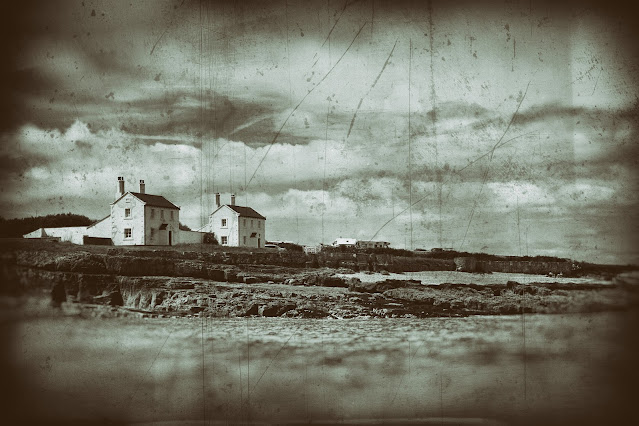
Monday's episode of Who Do You Think You Are? featured Ruth Jones, best known as the actor and writer behind the Welsh-based TV shows Gavin and Stacey, and Stella.
Probably unsurprisingly, Ruth's family was primarily Welsh - although most people from South Wales in particular have some English ancestry somewhere along the way.
The part of the family we followed with this episode, though, were Welsh through and through.
Encompassing both rural, and, more extensively, maritime Wales, Ruth's episode showed how much coal permeated through the Welsh economy in the 19th Century.
Moving on from there, the episode looked at Ruth's ancestor's connection to the Welsh medical societies that acted as a fore-runner to the NHS, and correspondence between him and Aneurin Bevan himself.
All in all, it was a sturdy little episode comprising the penultimate offering of this small series.
A brief reminder that Saturday (31st October) is the last day to get in touch with me for Christmas 2020 orders.
Check out familyhistorybycerys.co.uk to see my range of services, and please don't hesitate to get in touch!


 The County Observer and Monmouthshire Advertiser shows us that the obsession with rainfall and the British weather goes back over a century - on 3rd January, 1906, the paper reported that three inches of rain had fallen over the previous 15 days, with 1'8 inches being the monthly average.
 |
| Image courtesy of dan at FreeDigitalPhotos.net |
